

Home > Realtor Resources > 2000-2010
This page is a realtor-facing reference. If you are a homebuyer reading this, start with How to Read Your Inspection Report
2000–2010 Home Inspection Guide — The High-Efficiency & AFCI Era
A major shift toward high-performance building standards and the widespread adoption of modern safety technologies like AFCI protection. But in Texas, rapid suburban expansion often meant rushed workmanship and experimental materials that are now reaching their failure points. The transition to Arc-Fault protection, the phase-out of R-22 "Freon," and moisture issues from increasingly "tight" construction all show up here.
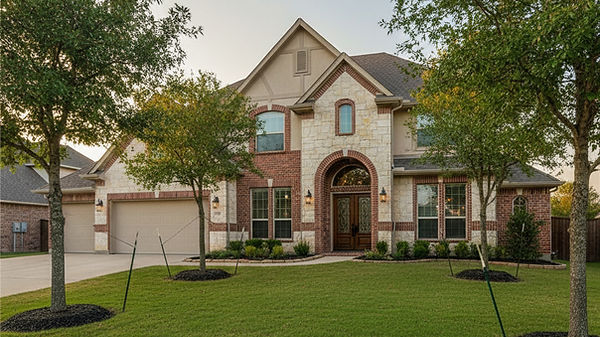
Here's what your buyer's inspector will most likely flag. The body of this guide is organized by the four major home systems, followed by the High-Efficiency Trap — the patterns specific to 2000s construction that hide problems behind new technology and tight building envelopes.
Structural Systems
Foundations:
-
Post-Tension (PT) Maintenance: Look for rusting cable anchors at the slab edge where grease caps were missing or pockets were never grouted. Common shortcut on rapid-build subdivisions.
-
Landscaping Encroachment: Mature trees from the original build are now reaching the foundation; root barriers were often skipped, leading to soil "subsidence" and slab movement.
Grading and Drainage:
-
Settling Grade: Two decades of soil settling often creates a "bowl" effect, directing water toward the slab rather than away.
Roof Covering Materials:
-
End-of-Life Shingles: Early 2000s architectural shingles are hitting their failure point — look for excessive granule loss and "scabbing."
-
Radiant Barrier Foil: Common in this decade. When installed without a proper air gap, it can "cook" the shingles, shortening their lifespan.
Roof Structures and Attics:
-
Early Spray-Foam Encapsulation: Custom and semi-custom builds in the late 2000s began encapsulating attics. If the roof leaks, the foam traps water against the deck — invisible rot until structural.
Exterior Walls, Doors, and Windows:
-
Cultured Stone Failures: Peak years for improperly installed stone — look for the absence of a metal weep screed at the bottom and the lack of a drainage plane behind it.
-
Fiber-Cement (Hardie) Siding: Often installed with less than 2-inch clearance from rooflines or 6-inch clearance from grade, leading to moisture wicking and delamination.
-
Stucco Drainage Plane: Stucco installed without weep screeds or proper expansion joints. Cracking and staining at the bottom course is the tell.
Stairways (Interior and Exterior):
-
Handrail Height & Graspability: Many 2000s builds still used lower 30–32 inch heights instead of the modern 34–38 inch standard, with decorative profiles that fail the graspability test.
-
Baluster Spacing: Generally meets the 4-inch rule, but check for loose ornamental iron spindles
Electrical Systems
Service Entrance and Panels:
-
AFCI "Nuisance" Tripping: The first generation of AFCI breakers (required for bedrooms in 2002) were notoriously sensitive — they trip from treadmills, vacuums, and older drill motors. Replacement breakers are inexpensive and resolve most issues.
-
Double-Tapped Neutrals: Common in rushed 2000s panels — two "neutral" wires under one screw is a TREC deficiency.
-
Mismatched Panels and Breakers: Off-brand breakers in panels, often from supply chain shortages or improper repairs. Verify the breaker brand matches the panel manufacturer's UL listing.
-
Solar PV Installations: First-wave residential solar (2008–2010) frequently lacks proper disconnect labeling, rapid-shutdown compliance, or original permit documentation. Verify the interconnection agreement is in the file.
Branch Circuits:
-
Tamper-Resistant (TR) Outlets: Required starting in 2008. Homes built 2008–2010 missing these are a safety deficiency.
-
GFCI Protection Gaps: Often missing in 2000s laundry rooms or wet bars as requirements expanded mid-decade.
-
Early Smart-Home Wiring: First-generation structured wiring (Cat 5/RG-6 bundles) often terminates in a garage or utility-closet panel that's been abandoned — verify whether the network drops are actually live.
HVAC Systems
Heating Equipment:
-
High-Efficiency Furnace Failure: Early 2000s 90%+ efficient units often have failing secondary heat exchangers due to acidic condensate buildup. Visible rust at the inducer motor is the early warning.
-
Condensate Management: Look for improper disposal — draining onto the roof, into flower beds, or unsupported PVC runs that sag and trap water.
Cooling Equipment:
-
The R-22 Phase-Out: Units from this decade likely use R-22 (Freon), which was banned for new production in 2010. A single leak can cost $1,500+ in refrigerant alone, making repair uneconomical.
-
Aging Equipment: Original 2000s units are now 15–25 years old and at end-of-life — look for rusting on components or refrigerant oil staining at the coil case.
Duct Systems:
-
Under-Ventilation: "Tight" construction without ERV/HRV systems often leads to poor indoor air quality and the "musty" smell common in this era.
-
Flex Duct Damage: Crushed or kinked flex runs in attics, severely restricting airflow to specific rooms.
-
Improper Sealing: Attic heat breaks down tape adhesive and mastic over time. Look for separated joints at the plenum and air handler, especially where the original mastic has cracked and fallen away.
Plumbing Systems
Plumbing Supply:
-
Brass PEX Fittings (Dezincification): Certain brands (Vanguard/Viega yellow-brass fittings) suffered from "dezincification" — the brass turns to powder and leaks. Visible white powder at fittings is the tell.
-
Expansion Tanks: Missing on water heaters, which is required for modern "closed-loop" systems when a Pressure Reducing Valve is present at the meter. Causes water pressure spikes that fatigue fittings.
-
Tankless Water Heaters (Early Adopters): Late-2000s tankless units often need annual flushing for scale. Without service records, they typically throw error codes during the inspection test.
Drains, Wastes, and Vents:
-
Failed Vent Boots: The rubber seals on roof vents typically fail after 10–12 years — exactly the failure window for homes from this era.
-
AAV (Air Admittance Valve) Failures: Used in island sinks and remodels. Internal diaphragms typically fail after 8–10 years, causing slow drains and sewer-gas smells.
The "High-Efficiency Trap" (2000–2010 Specialty)
-
The Chinese Drywall Issue: Imported drywall during the 2005–2008 supply crunch off-gassed sulfur compounds that corrode copper plumbing, AC coils, and electrical fixtures. Blackened copper at outlets and AC lines is the visual signature. Confirmed lab testing is the only definitive diagnosis.
-
The "Smart Home" Retrofit: Smart thermostats installed on old 2000-era HVAC boards without a C-wire. Sellers and installers use power-stealing adapters that cause the control board to "chatter," fail, or behave intermittently.
-
The "LVP over Slab": Luxury Vinyl Plank installed over a 2000-era slab without a moisture barrier — traps moisture and creates mold under the "waterproof" floor.
-
The "Stone Veneer Refresh": Cultured stone added to boost curb appeal without a drainage plane, creating a "moisture sandwich" that rots the underlying OSB sheathing.
Realtor Advice & Strategy
For Buyer Agents
-
The "Freon" Script: The AC unit is likely an R-22 system. While it works now, a single leak could cost $1,500+ in refrigerant alone — and the EPA banned new R-22 production in 2010. We should budget for a full system upgrade in the next few years.
-
The Chinese Drywall Script (for 2005–2008 builds specifically): This home falls in the Chinese drywall window. If you notice a sulfur smell, blackened copper, or repeated AC coil failures, that's the signature. It's not visible on a standard inspection — we'd need a separate lab test if there's any indicator.
-
The Siding Check Script: Look at where the stone meets the ground. If you don't see a metal weep screed, moisture is likely trapped behind that stone — and the OSB sheathing behind it is probably already rotting.
For Seller Agents
-
Replace the Vent Boots: Have a roofer replace the rubber plumbing vent boots for $200 before the inspection. Active staining at vent penetrations is one of the most common "Active Leak" red flags on homes from this era.
-
Service the HVAC: Have a recent service invoice ready to prove the aging R-22 system is charged and functional. Pre-inspect the evaporator coil if possible.
-
Document the Solar (if applicable): If the home has first-wave solar, gather the original permit packet, interconnection agreement, and any warranty paperwork. Missing documentation is a common deal-stalling item.
-
Flush the Tankless: If the home has a tankless water heater, have it flushed by a plumber before the inspection — otherwise it will likely throw error codes during testing.
Recommended Ancillary Services
-
Thermal Imaging: Crucial for finding insulation voids in the complex vaulted ceilings common to this era, and for hidden moisture behind stone veneer.
-
Sewer Scope: Checks for construction debris (hardened grout, drywall mud) flushed during the original build, and early signs of root intrusion as landscaping matures.
-
Mold/Air Quality Testing: Recommended if the home feels "musty" — tight construction and poor ventilation are a known issue in this decade.
-
Chinese Drywall Lab Testing: For 2005–2008 builds with any visible corrosion signatures on copper plumbing, electrical, or AC components.
If You're a Buyer Reading This...
A long list of findings on a home of this age is normal — not a red flag. Your inspector is required to identify deficiencies against today's safety standards, not the standards in place when the home was built. Read How to Read Your Inspection Report to learn how to triage findings by priority.
Inspecting an early 2000s home in the I-35 corridor? Schedule with Property Pulse.
Call or text: (830) 800-0440
Same-day scheduling when available. Same-day report on every inspection. Serving the I-35 corridor from San Antonio to South Austin.
⭐ 5.0 on Google — read reviews
Mike McCown · TREC #26408 · InterNACHI CPI · CCPIA Certified